
The Last Thing on Our Burger We Weren’t Making Ourselves
Let's talk about the bun.
No. Wait. First let's talk about NINE YEARS, because that’s long enough to raise a human child to the point where it can lie to your face about brushing its teeth.
Nine.
Years.
That's how long we ran a burger operation with skeletons in our closet. The secret was: the bun came from somewhere else, and it was great, and nobody knew simply because we never mentioned it, which — legally — is not lying, it's just silence with excellent PR
Here is a complete list of everything on our burger that we, personally, with our own hands, made from absolute scratch, seven days a week, for nine consecutive years:
1. The meat. Seasoned. Shaped. Pressed with hands that now have calluses I show to strangers uninvited, at parties, sometimes at funerals.
2. The sauces. Built. Not “assembled.” BUILT.
3. The pickles. Brined by a human being who could have spent that time learning the cello.
4. Our crushing, ambient sense of self-satisfaction.
And here is the complete list of what we did NOT make:
1. The bun.
That's it. That's the whole list.
An Important Legal Clarification Before We Continue
I need to stop the bit for one second because before we assume the bought bun was bad and made of regret, I need to clarify that it was a perfectly decent bun. In fact, the bun was excellent. It never let us down. The bun showed up every single day like a reliable coworker who never asks for a raise and never will, because it's bread, and bread cannot unionize (yet).
This is a story about a GOOD bun. That's what makes it embarrassing. If it were bad we'd just look competent for finally fixing it. Instead we look like people who owned a perfectly nice car for nine years and never once checked what was in the trunk.
Enter: A Man From Kentucky, Who Is Simply Too Nice, Actually, We Have Concerns
Stephen owns Anchor Cafe & Roastery in Batam. He is American. He is from Kentucky. He runs an entire Western restaurant in Indonesia with ZERO rice on the menu, a decision so aggressively confident it should require a permit.
He has eaten with us more than once, and every single time, he has been exactly what he appears to be: a genuinely great guy, no asterisk, no plot twist, no third act reveal where he turns out to be running a pyramid scheme out of his roastery. We checked. We looked under the hood. It's nice guy all the way down, like a Russian nesting doll where every doll inside is also just really pleasant to talk to.
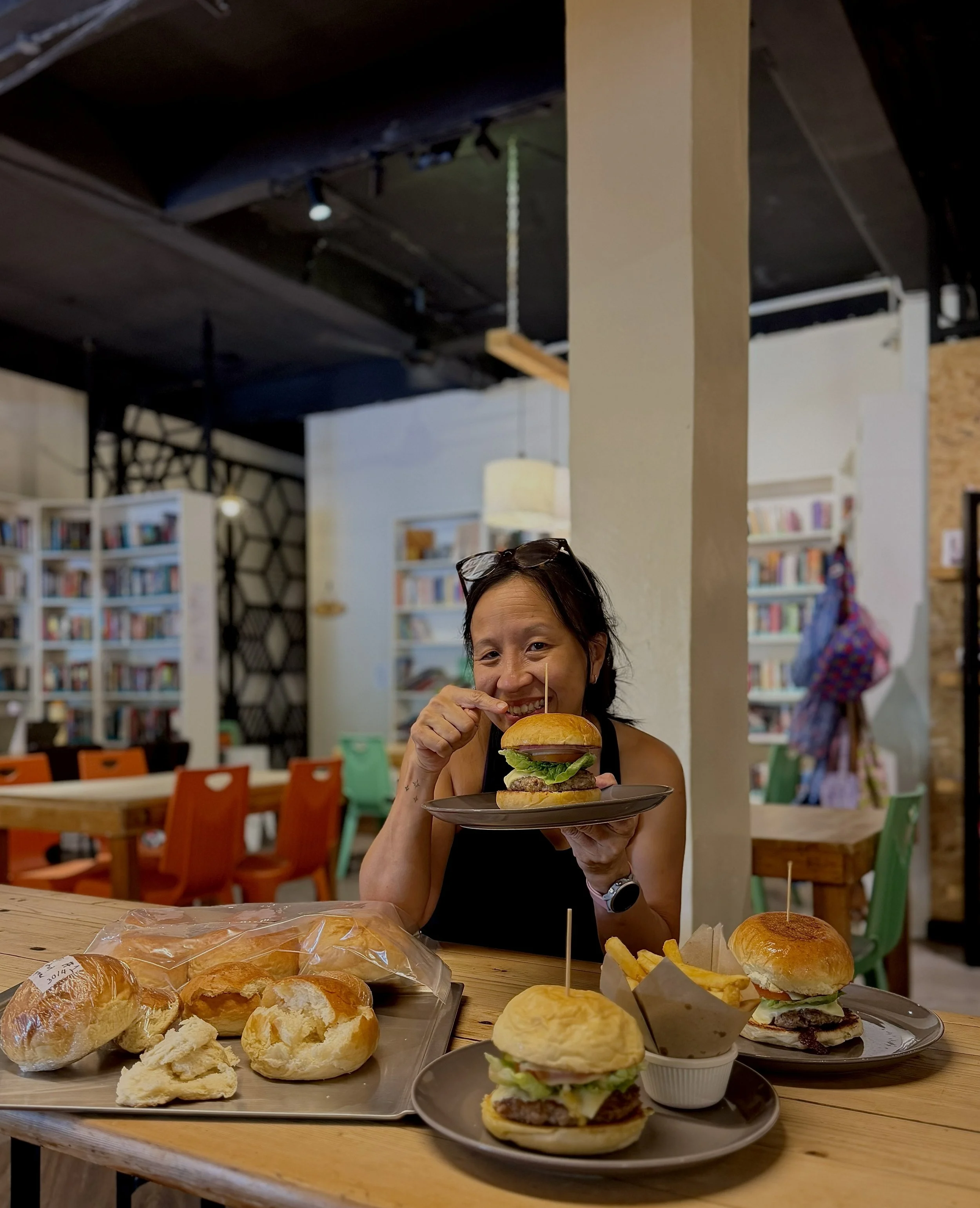
He looked at our burger — our great burger, on our great bun, made by a stranger — and asked the one question none of us had asked ourselves in nearly a decade:
“Why isn't this bread yours?”
Not “what's wrong with it.” Nothing was wrong with it. Just: why isn't it yours. A much scarier question, if you think about it, which we hadn't, for nine years.
We gave him several answers. All of them, upon inspection, were the same answer wearing a series of increasingly elaborate disguises, like a raccoon trying to sneak into three different parties: we had tried. Once or twice, years ago. And what came out of the oven was, technically, bread, in the same way a folding chair is technically furniture — and we made a quiet executive decision, as a group, to never let that sadness reach a customer's plate. So we stopped. We called someone else. We let the someone else be great at it so we didn't have to be bad at it in public.
Also, Stephen happened to be correct about the money too. Baking it ourselves is cheaper. Meaningfully. Insultingly. And was apparently, according to a very convincing Stephen shrouded in good guy aura, not even that hard, which raised an uncomfortable follow-up question: if it wasn't that hard, what exactly had gone wrong the first time. We did not have an answer..
Meanwhile, In The Dessert Department: A Completely Different Energy
Okay, tangent, but necessary. We (Joyce mostly) are/is, and have always been, disgustingly good at desserts. It's not a skill we even talk about anymore, because we bake the odd humble pie pretty well too. Cakes leave our kitchen looking like they've never experienced a single moment of self-doubt. Tall. Structurally sound. Radiating the energy of a golden retriever that has never once been told no.
Joyce Goes To Batam And Returns A Changed Woman
Joyce is one of the three of us who started this place. She is the one with the thoroughly impressive dessert resume that bread didn’t take the time to read. She flew to Batam and spent four days inside Anchor's kitchen — not observing, WORKING, elbow-deep, asking questions the rest of us would've been too polite to ask a man wearing a t-shirt that says he's nice.
She came home with recipes that worked. In Batam. In Stephen's kitchen, with Stephen's oven, flour, humidity, altitude, and possibly Stephen's aura. She brought all of it home, followed it to the letter, and it fell apart the second it left Indonesia, like a long-distance relationship that seemed fine on the trip and then just wasn't once everyone was back home with their own ovens.
The Dark Ages (Six Weeks, Roughly, Never Officially Confirmed)
Turns out a recipe isn't a recipe so much as a set of directions written for a very specific house that is not your house. Our flour was different. Our air was different. Our oven had opinions Anchor's oven had never had to deal with. So what came home from Batam as a working method arrived here and just... didn't.
And there, standing in the corner of our kitchen, rattling its chains, was The Ghost of Sad Bread Past — back from wherever we'd buried it years ago, absolutely thrilled to see us again. It didn't say anything. It didn't have to. It just stood there being dense and vaguely disappointed in us, the way it always had.
So there was tweaking. Like a lot of it, partly to fix the recipe and partly, we suspect, to exorcise the ghost. Joyce entered a period of her life we can only describe as Humble Bread Slave Era — hunched over proofing baskets at odd hours, adjusting hydration by the gram, apparently baking for a panel of bread connoisseurs with curly waxed mustaches and monocles who kept sending each batch back with a small, disappointed “hm.”
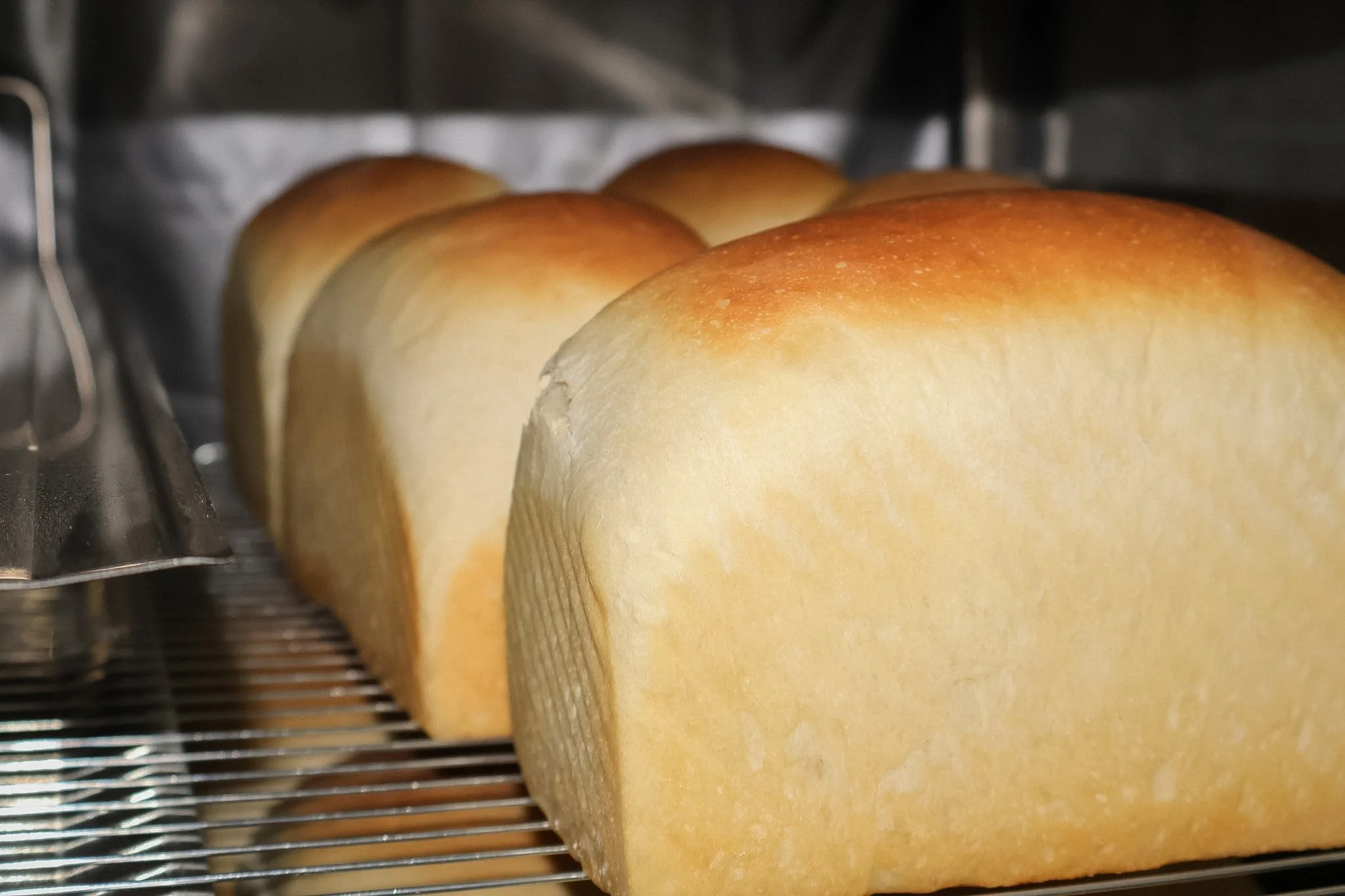
The first buns to come out of THIS process were dense in a way that has never once appeared in a food blog with a flattering adjective attached. Not “rustic.” Not “hearty.” Dense in the way where your jaw files a formal complaint mid-bite.
Some stuck to your teeth like a helicopter mom. Some collapsed flat under a single patty and simply gave up without a follow-up attempt, nothing, turning a burger into a sad, structurally compromised sandwich. A few emerged from the oven with the visual equivalent of a friend insisting they're “totally fine” while their eye twitches.
WE ATE ALL OF IT. Every single failure. That was the rule, a stupid rule, kept anyway, on the theory that if we weren't willing to personally suffer for the science, we had no business selling anyone the results.
Somebody really should study what happens to a person's ego after nine years of perfect desserts followed by six weeks of catastrophic bread. Not us specifically. Someone. A grant should exist.
What Actually Fixed It (This Part Has To Be TRUE, Not Vibes, We Mean It)
The answer is less dramatic than six weeks of public suffering would suggest, which is the most irritating thing about most answers.
First, Joyce had to learn to read the failure instead of just eating it. Under-fermented dough and over-proofed dough both come out of the oven wrong, but they come out wrong in different ways, and for a while we were confidently fixing the wrong one — which is a bit like treating a fever by repainting the bedroom. Once she could tell the two apart, the batches stopped being random events and started being data.
Then the flavour problem, which was worse than the texture problem and got less attention because it's harder to draw. Some of those loaves weren't just dense. They were dry, and — genuinely, unforgivably — tasteless. Bread-shaped.
The fix for that is not complicated and never has been: real butter and fresh milk. Which brings us directly back to Stephen and his money argument, because the entire reason we started this was cost, and the fastest way to make bread taste like something is to make it expensive. So the actual job was landing on enough butter and enough milk to taste like Joyce made it, without landing us somewhere more expensive than the bun we'd been buying all along.
Then the flour. Several kinds of bread flour, tested, rejected, and quietly resented in turn.
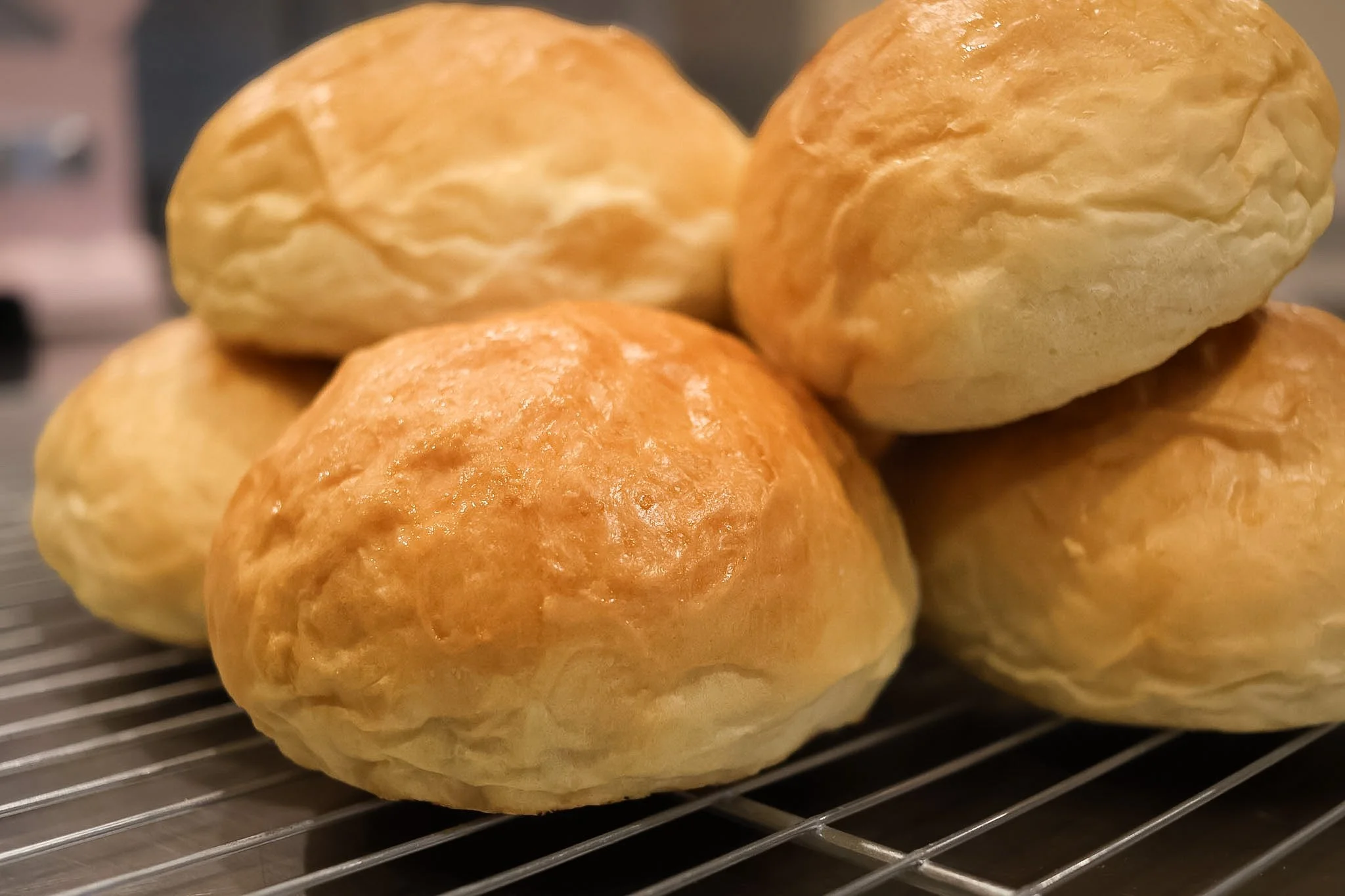
And then the thing that finally worked: tangzhong. You cook a small portion of the flour and liquid into a paste before it goes anywhere near the rest of the dough. That's it. That's the whole trick, and it's been sitting in Asian bakeries for decades while we were down the road buying buns in a bag.
King Arthur Baking explains why it works: cooking that slurry gets the starch to take on more water and hold it, through the bake and after it, so the bread comes out softer and stays soft for days instead of hours. They also note that tangzhong wants bread flour specifically, for the higher protein — which is exactly why Joyce ended up flour-shopping — and that an enriched dough with real butter and milk in it stays fresher than a lean one anyway.
So the butter wasn't only a flavour decision. It was a shelf-life decision wearing a flavour decision's jacket.
380 Buns A Month. Zero Frozen. We Have Become Insufferable About This
We go through roughly 380 buns a month. Baking starts at 6am, because proofing takes exactly as long as proofing takes and does not respond to negotiation, bribery, or a stern voice.
We don't freeze them. Freezing would make everything so much easier. But it also changes the bread, and at some point you have to decide if you're the kind of place that takes the harder week or the kind of place that lies to itself for convenience. We took the harder week.
There Is Also A Loaf Now. Nobody Asked For A Loaf. We Got One Anyway
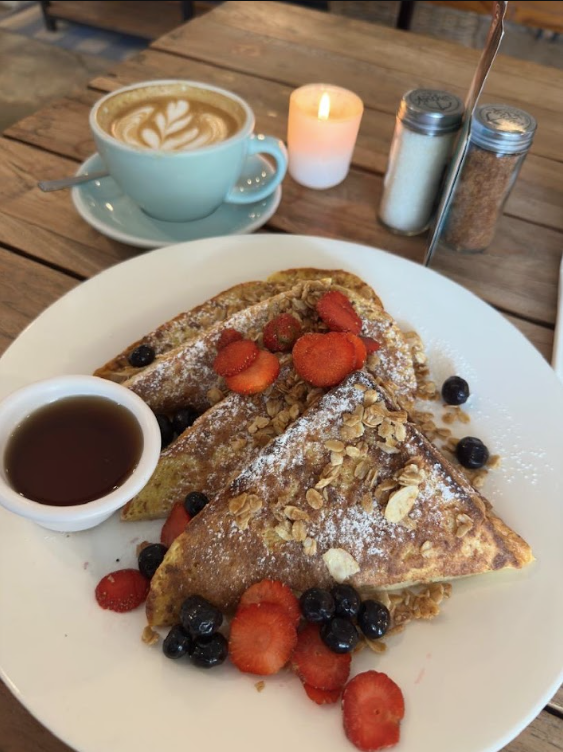
Once you can make a bun, apparently the universe simply hands you a loaf. Our French toast used to come from a square sandwich loaf cut corner to corner into triangles. Now it comes from a milk bread loaf we bake ourselves, rising with a dome instead of a flat top, so the slices come out rounded up top and straight along the bottom. It’s a shape I did not know I could have feelings about until, apparently, I could.
It looks like bread does when you’re trying to draw it in a game of Pictionary. Genuinely strange thing to be proud of. I am extremely proud of it.
It also soaks differently, which matters more than the shape, but the shape is what I keep thinking about at inconvenient times, like right now. That loaf is now our house white bread across the entire menu, not just a French toast side character.
We bake it for the restaurant once a week. Want one to take home? Tell us ahead of time and we'll bake yours in the same batch, fresh, instead of handing you something that's been sitting on a shelf since morning, silently judging your choices. Not a product line. Just easier for everyone if you ask first, and also, frankly, we're not ready to be a bakery, we're barely ready to be this.
Nine Years Is An Absurd Amount Of Time To Be “Almost Finished”
We're not going to stand here and claim this makes us a bakery. It makes us a restaurant in Tanjung Bungah that finally, FINALLY stopped outsourcing the one thing holding the rest of it up.
FREQUENTLY ASKED QUESTIONS
-
Yes. We bake every bun in-house in Tanjung Bungah, from a tangzhong-style dough with bread flour, real butter and fresh milk. For nine years we bought them in. Now we bake them ourselves.
-
We use tangzhong. A small portion of the flour and liquid is cooked into a paste before it goes into the dough, so the starch holds more water and the bread stays soft for days instead of hours. We also use real butter, fresh milk and bread flour.
-
Yes, if you tell us ahead of time. We bake a milk bread loaf for the restaurant once a week and we’ll bake yours in the same batch. It’s not a product line, so please ask first.
-
We’re at 18 & 20 Lebuh Lembah Permai 4, Tanjung Bungah, open every day from 8am to 9pm. There’s free parking on site. You can reserve a table on WhatsApp at +60 16 215 4234.
-
No, we’re not halal-certified. We do have vegetarian-friendly options, and some dishes can be adapted. If you have dietary questions, message us on WhatsApp before you visit.